

Israeli-American “War of Choice” Aims at Regime Change in Iran by Maher Charif
Analysts distinguish between a “war of necessity,” waged by a state in response to a genuine threat, and a “war of choice,” launched in the absence of such a threat.
Drawing on the distinction articulated by Richard Haass, former president of the Council on Foreign Relations, they argue that the war launched by U.S. President George H. W. Bush’s administration against Iraq in 1991 to expel its forces from Kuwait was a “war of necessity.” By contrast, the war initiated by George W. Bush’s administration against Iraq in 2003 to change its regime was a “war of choice,” as Iraq did not at the time pose a threat to the United States or its regional allies.
Today, many security analysts describe the war that Benjamin Netanyahu reportedly succeeded in drawing Donald Trump into on the morning of Saturday, February 28, as a “war of choice,” contending that Iran does not currently constitute a direct military threat to either Israel or the United States. This article examines the circumstances surrounding the outbreak of this war.
Araghchi: “Understandings Have Become Very Close”
In an interview with Iranian television following the conclusion of the third round of Iranian-American talks, Iranian Foreign Minister Abbas Araghchi confirmed that the discussions held in Geneva on Thursday, February 26, had achieved significant progress and that a fourth round would soon be scheduled. He described the session as “one of the best, most serious, and longest rounds of negotiations.”
He noted that on some issues, “understandings have become very close, despite ongoing differences in viewpoints.” He added that it had been agreed that technical teams would begin discussions the following Monday in Vienna, at the headquarters of the International Atomic Energy Agency. He anticipated that the next round of talks between the delegations would take place “within less than a week.”
Araghchi stressed that “there is no military solution” to the nuclear issue, recalling that “the other side tried this option in the past and it failed,” and emphasizing that dialogue remains the only viable path to resolving the issue.
Netanyahu: “We Have Removed Every Threat to Israeli Citizens”
On Monday afternoon, February 23, Netanyahu delivered a speech before the plenary of the Knesset, where he said: “We are in complex and challenging days…No one knows what tomorrow will bring. We are keeping a watchful eye; we are prepared for any scenario.”
Regarding tensions with Iran, he said: “We are in days of intense challenge and complexity, no one knows what tomorrow will bring; We are keeping a watchful eye; we are prepared for any scenario.” He added: “I have conveyed and clarified to the Ayatollahs’ regime that if they make what might be the gravest mistake in their history and attack the State of Israel, we will respond with a force they cannot even imagine.”
Netanyahu highlighted his diplomatic relations with the United States, saying: “I recently returned from my seventh meeting with the President of the United States since his election. In the last two and a half years, we have pushed back a threat against… the 10 million citizens of Israel, who faced the danger of annihilation by the Iranian enemy and its proxies.”
He added that Israel has “never been stronger,” and that “the alliance with the United States ever been tighter,” pointing directly to his relationship with President Trump and the close coordination between the two nations’ security services and agencies, concluding, “I am confident in our strength. I trust our commanders. I trust our male and female fighters. I trust our people.”
Netanyahu Calls on the Iranian People to Overthrow the Regime
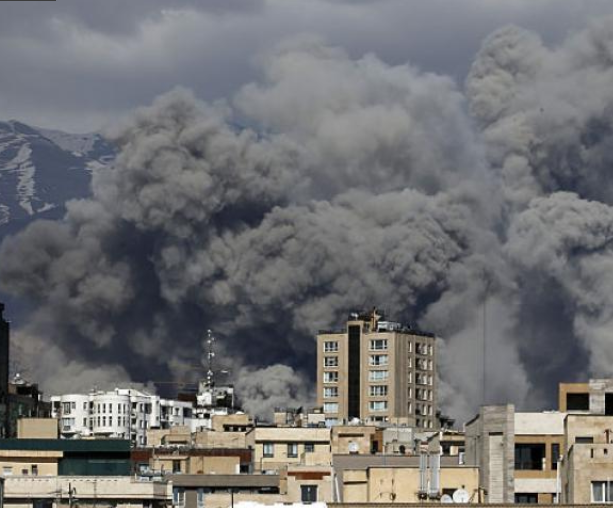
A few days after he declared the “removal of the threat of annihilation” from Iran and the elimination of “every threat” to Israeli citizens, Netanyahu characterized the attack launched by the Israeli military on the morning of Saturday, February 28, as an effort “to remove the existential threat posed by the terrorist regime in Iran.” He urged Iranians to “free themselves from the chains of tyranny,” and to seize the opportunity created by the joint American-Israeli strike “to rise up and overthrow the regime.”
In a televised address, Netanyahu spoke directly to the Iranian public, declaring: “Do not miss this opportunity, it is a one in a generation chance. Do not stand idly by; soon your moment will arrive, the moment when you will be called to take to the streets in your masses. To take to the streets to finish the job, to topple the regime of horrors that embitters your lives.”
In an effort to dismantle the Iranian regime’s capabilities and potentially pave the way for its overthrow, the joint Israeli-American military operation focused, in its opening hours, on the core pillars of the regime, foremost among them Supreme Leader Ali Khamenei.
According to The New York Times, the Central Intelligence Agency “learned that a meeting of top Iranian officials would take place on Saturday morning at a leadership compound in the heart of Tehran. Most critically, the C.I.A. learned that the supreme leader would be at the site.” The newspaper added that the United States and Tel Aviv “decided to adjust the timing of their attack, in part to take advantage of the new intelligence,” shifting it from a planned nighttime strike to Saturday at 9:40 a.m. local time, using long-range air-to-ground missiles.
The Israeli military claimed that it killed forty senior Iranian officials during the strike, including Ali Khamenei, Defense Minister Aziz Nasirzadeh, Revolutionary Guard Commander Mohammad Bagherpour, the police intelligence chief, and Supreme Leader adviser Ali Shamkhani.
Trump Uses Negotiations as Cover to Prepare for War
On February 18, White House spokesperson Karoline Leavitt warned during a press briefing that Iran “would be wise if it concluded an agreement” with Donald Trump, asserting that there were numerous reasons and arguments supporting the possibility of a U.S. military strike on Tehran. Her remarks followed a new round of indirect talks between Washington and Tehran held in Switzerland. While emphasizing that diplomacy remained the U.S. president’s “first option,” Leavitt stressed that Trump makes military decisions “in the interest of the United States and its army and its people.”
In his “State of the Union” address delivered on February 24, Trump appeared to justify the prospect of military action against Iran, arguing that Tehran refuses to abandon nuclear weapons ambitions and continues to expand its missile program. “They have already developed missiles capable of threatening Europe and our bases abroad, and they are working on missiles that will soon be able to reach the United States,” he said. He added: “There is one thing that is certain, which is that I will never allow the world’s largest sponsor of terrorism to obtain a nuclear weapon.”
On Friday, February 27—one day before the outbreak of war—Trump stated that he was “not happy” with the trajectory of the talks with Iran, though he had not yet reached a final decision regarding the feasibility of engaging in a new American military conflict with Iran within less than a year. Trump reportedly claimed that he prefers to avoid using force, but that sometimes “you have no other choice.”
These comments came despite reports that the previous day’s negotiations had been viewed positively. Badr al-Busaidi, Oman’s foreign minister and mediator in the talks, said on Friday that American and Iranian officials had achieved “tangible progress” in Geneva and that a “peace agreement is within our reach.” In an interview with CBS News, he stated that Iran had pledged “not to possess any nuclear materials capable of making a bomb,” describing this as a “great achievement.” He further confirmed that Tehran had agreed not to stockpile enriched uranium, calling it “something entirely new,” and arguing that this shift rendered the enrichment debate less central, since the focus was now on the absence of stockpiling.
Trump to Iranians: “The Time for Your Freedom Has Come”
As the American attack on Iran began, Donald Trump delivered a televised address from his residence in Florida, recounting what he described as the “numerous attacks” carried out by the Iranian regime against American interests since 1979. He declared his determination to “destroy their missiles,” “raze their missile industry to the ground,” and “annihilate their navy.”
Addressing the Iranian people directly, Trump proclaimed: “The hour of your freedom is at hand. Stay sheltered. Don’t leave your home. It’s very dangerous outside. Bombs will be dropping everywhere. When we are finished, take over your government. It will be yours to take. This will be probably your only chance for generations.” At the same time, he acknowledged that “the lives of “courageous American heroes may be lost,” appearing to prepare the American public for potential casualties during the conflict.
Shortly thereafter, Reza Pahlavi, son of the last Shah of Iran, announced that the country was “on the verge of achieving final victory,” and called for nationwide mobilization against the regime.
One day after launching the strikes on Iran, Donald Trump stated in a brief interview with the Daily Mail that the military operation could last “four weeks or less.” In remarks reported by The New York Times, he added that he has “three excellent options” among potential candidates to lead Iran, but that he “will not reveal them” until he “finishes the mission.”
In a video address on his platform Truth Social, Trump vowed to “avenge” the killing of three American soldiers at a base in Kuwait and welcomed the reported killing of Supreme Leader Ali Khamenei. He urged members of the Revolutionary Guard to “lay down their arms,” warning them of “certain death.” He further claimed that many Iranian officials “want to surrender to save their lives, they want immunity, and they are calling us,” before renewing his appeal for regime change: “I call on all Iranian patriots seeking freedom to seize this opportunity, to show courage, boldness, and heroism, and to reclaim power; America is with you.”
In an interview with The Atlantic, Trump had also claimed that the new Iranian leadership now wishes to enter into dialogue with him, and that he has accepted this principle. He said: “They want to talk, and I have agreed to talk, so I will talk with them. They should have done that sooner, they should have given what was very practical and easy to do sooner, they waited too long.” When asked about the timing of these talks, he replied that he could not provide further statements, but indicated that “many of the Iranian negotiators have passed away.”
Trump and the “War of Choice”
Under the headline “Trump and the Perfect Example of a War of Choice,” American political and security analyst David E. Sanger argued that Trump’s war on Iran represents an archetypal “war of choice.” According to Sanger, the U.S. president “was not driven by an immediate threat, nor was there a race to build the [nuclear] bomb,” particularly after Trump had previously claimed to have neutralized Iran’s nuclear enrichment capabilities in June 2025. There was likewise no indication that an Iranian attack on the United States or its allies or its bases in the region was imminent.
While Trump maintained that Tehran was aiming to strike the United States with its missiles, Sanger writes, “even his own Defense Intelligence Agency concluded last year that it would be a decade before Iran could get past the technological and production hurdles to produce a significant arsenal.”
Sanger further noted that Trump “never provided evidence of an imminent threat,” nor did he clarify why a nuclear program he had claimed to have dismantled months earlier had allegedly resurfaced. He questioned why Iran would take priority over other nuclear-armed or expanding powers such as North Korea, Russia, or China. The decision, Sanger argued, resembled that of George W. Bush to overthrow Saddam Hussein, justified at the time as necessary to counter an alleged threat to international peace. As with the 2003 Iraq War, he suggested, there was “no necessity” to strike Iran, and preventive war by a stronger state against a weaker one is illegitimate under international law. He also observed that Trump made no effort to obtain authorization from Congress to use military force.
Some analysts have additionally argued that Trump’s decision to wage war unfolded in a tense domestic political climate, only months before midterm congressional elections, amid unfavorable polling and rising public dissatisfaction over inflation and purchasing power. In this view, the conflict may serve to divert attention from domestic economic challenges and foster a temporary “rally around the flag” effect.
In an article titled “Iran, Palestine and the Future of the Next Century: The Final Strategic Test,” published on the eve of the war, historian Jeremy Salt of the University of Melbourne argued that a single word explains Washington’s determination to confront Iran: Israel.
According to Salt, absent Israel’s influence, the United States could have normalized relations with Iran long ago, pointing to outreach efforts under former Iranian presidents Akbar Hashemi Rafsanjani (1989–1997), who sought to advance trade agreements, and Mohammad Khatami (1997–2005), the “moderate’ liberal reformer and architect of a ‘dialogue of civilizations.’”
Regarding uranium enrichment, Iran’s theoretical capacity to develop a nuclear weapon, and its ballistic missile program, Salt characterized these concerns as “weak arguments,” claiming that Israel seeks the destruction of the Islamic Republic because it stands in the way of a broader regional strategy.