
![Centro de Estudos em Geopolítica e Relações Internacionais [CENEGRI]](https://cenegri.org.br/wp-content/uploads/2023/11/cropped-CENEGRI-small2-1.png)
The Missile Saturation Gambit: China’s Strategy to Lure American and Israeli Firepower into a Costly Trap by Nadia Helmy
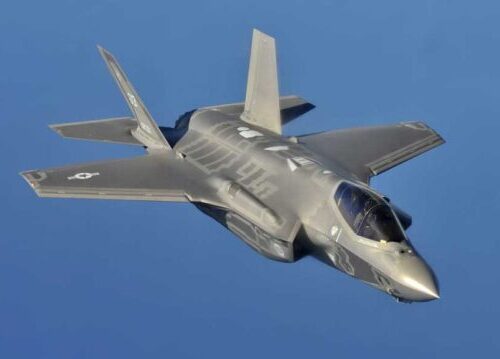
This new intelligence and military analysis, unprecedented in the world of military warfare, may be based on a controversial analytical view of what it calls the “Chinese-Iranian tactical trap,” which relies on luring the United States and Israel to deplete their missile arsenals on worthless targets.
This “tactical game,” as presented, can be summarized as follows: (Iran, with the help of satellites and Chinese artificial intelligence technology, deploys a number of decoy targets): Analyses indicate that Iran deliberately deploys sophisticated wooden and plastic models and dummy mines mimicking missile launchers, radars, and aircraft. The goal is to force American and Israeli missiles (each costing millions of dollars) to bombard virtually nothing, thus inflicting enormous financial and military losses. This is related to the (theory of “missile saturation” strategy): China’s support to Iran with technology to produce inexpensive drones and missiles, used to force air defense systems, such as the (Iron Dome or David’s Sling), to launch costly interceptor missiles, thereby (depleting the American strategic stockpile allocated to support Israel or Ukraine).
This plan aims to create a kind of “technological fatigue” by revealing the “signatures” of American and Israeli radars and the operational methods of air defense systems. Provoking them with decoy targets serves China’s goal of gathering intelligence on how to neutralize these systems in the future. The ultimate objective for both China and Iran remains ending the US-Israeli war of attrition. Beijing sees this attrition as a means to forcibly impose a “new reality of peace.” Once the US-Israeli missile stockpile reaches critical levels, Washington will be compelled to push for de-escalation, thus ending the conflict with geopolitical gains for China without firing a single shot.
This approach is widely adopted by Chinese intelligence and military circles, which have analyzed what they termed the “Chinese-Iranian trap” based on smart warfare of attrition. The dimensions of this tactical game can be summarized in the following points: (The “Decoy Targets” Strategy): this (Decoys) strategy plan relies on deploying thousands of decoy structures (missiles, aircraft, and dummy launch platforms) made of inexpensive materials but equipped with radar reflectors. And heat sources make them appear as genuine targets to American and Israeli reconnaissance systems. The aim is to provoke the adversary into using precision-guided and extremely expensive air-to-surface missiles to destroy targets worth only a few hundred dollars. This aligns with a new warfare strategy and military doctrine based on “low-cost missile saturation”: instead of direct confrontation with heavy weapons, swarms of suicide drones and rudimentary missiles (whose manufacturing technology China provides in massive quantities and at a low cost) are employed. The goal is to force American and Israeli air defense systems, such as the Iron Dome and Patriot, to operate at full capacity. The ultimate outcome of a direct military confrontation between China and Iran on one side and Israel and the United States on the other is the depletion of interceptor missile stockpiles, such as the Tamir or Arrow missiles, each costing many times the price of the target they destroy. Chinese military expertise also aims, by pushing Iran to adopt this tactic, to deplete its strategic reserves. Here, China recognizes that the military production capacity of the United States and its allies is facing a significant challenge and pressures (especially with the simultaneous wars in Ukraine and the Middle East).
These new Chinese military strategies and tactics in confronting Washington and Tel Aviv aim to bring the American-Israeli ammunition stockpile to a “critical point,” while the Chinese-Iranian effort causes the strain on the American and Israeli military budget through billions of dollars spent on defensive missiles to counter “primitive” weapons, which makes it easier for China to pursue a passive technological espionage strategy against them by drawing the Americans and Israelis into bombing. Here, technical teams (under indirect Chinese supervision) can monitor the radar signature and the way modern missiles operate during engagement, which helps Beijing develop jamming and neutralization systems for these weapons in the future. The ultimate goal behind these new Chinese tactics on the battlefield between Israel and the United States against Iran is to impose a “forced peace.” The end result of this Chinese plan, specifically aimed at assisting its ally Iran, is to compel Washington and Tel Aviv to halt military operations not due to a “conventional military defeat,” but rather due to the logistical and financial inability to continue a war that achieves no tangible results against real targets. This would grant China the role of a “powerful mediator” to redraw the map of the region.
Herein lies this “tactical trap,” a Chinese strategy aimed at “achieving victory without direct combat” by transforming American and Israeli firepower into a financial and military burden for them. This is achieved through the following points: (Creating a “military mirage”): Analyses indicate that China has supplied Iran with “composite materials” technologies and radar-absorbing or radar-reflective coatings to create decoys.
These decoys accurately mimic the thermal and radar signatures of Fateh and Khorramshahr missiles. This causes the American and Israeli satellites or pilots to perceive a “strategic” target worthy of bombing when in reality it is a plastic dummy. From a Chinese military perspective, this leads to a “cost-asymmetric equation.” The Chinese tactical trap relies primarily on depleting American and Israeli interceptor or attack missiles, each costing $2-3 million, such as Patriot missiles or fifth-generation aircraft missiles, to destroy a decoy target costing no more than a thousand dollars. This leads to a “supply chain strain,” as China understands that the American defense industrial base suffers from slow replenishment of depleted stockpiles. Therefore, luring them into bombing decoy targets in Iran reduces Washington’s ability to support other fronts, such as Taiwan or Ukraine.
Furthermore, China’s adoption of this tactic, with Iran’s assistance, is considered effective for China in gathering “combat data” on the battlefields and in actual field engagements. While the Americans and Israelis are engaged in bombing, Chinese monitoring stations (indirectly) collect data on the frequencies of modern radars and the operational methods of “attack interceptor” missiles. This gives Beijing a long-term intelligence and military advantage for developing future jamming systems.
Based on the preceding intelligence and military analysis, we find that the ultimate outcome of these Chinese tactics is to end the war through the “military bankruptcy” of the American-Israeli adversary. The United States and Israel will find themselves with empty ammunition depots without having achieved any real destruction of Iran’s actual capabilities, forcing them to retreat and accept the political terms of Beijing and Tehran.